150ml of almond milk (or any other plant based milk)
2 tablespoons of shelled hemp seeds
1 tablespoon of oats
1 teaspoon of almond butter or tahini
1 teaspoon of vanilla powder
Method
Simply cut the peach flesh off the stone, then place all the ingredients into a blender and blend until smooth
This is my favourite smoothie at the moment, it’s absolute perfect for summer as it’s so sweet and refreshing. I’ve been making it for breakfast after my workouts this week as it’s full of planet based protein from the mix of hemp seeds, almond butter/tahini and almond milk, plus the added oats make me feel great energy! If you want something extra delicious, try pouring half of it into a bowl and adding granola – it’s amazing!
Ingredients:
1 ripe banana (about 200g).
1 ripe mango (about 320g).
5 tablespoons of coconut milk.
1 tablespoon of maple syrup.
Method:
Simply peel the bananas and mangos and roughly chop them. Then place all the ingredients into a blender and blend for a minute until smooth, pour into an ice lolly mould and freeze. My lollies needed to freeze for about 5 hours before they were ready to be enjoyed!
These mango and coconut ice lollies are a dream. They’re so quick and easy to make but so delicious! They’re the perfect summer snack or simple dessert and I promise everyone will love them. They taste so incredibly sweet and creamy, there’s absolutely nothing about them that seems healthy! Plus they only need four simple ingredients, all of which are available anywhere so anyone can make them anytime.
Here are 10 reasons why beer is not really bad for you, if had in moderation. Please note, this is not an encouragement to imbibe, especially if you are a teetotaler or have a medical condition
1. Beer drinkers live longer Moderate drinking is good for you, and beer is good for moderate drinking. Everyone knows that if you drink too much, it's not good for you. Let's not pull punches: If you're a drunk, you run into things, you drive into things, you get esophagealcancer, you get cirrhosis and other nasty conditions. But more and more medical research indicates that if you don't drink at all, that's not good for you either. According to numerous independent studies, moderate drinkers live longer and better than drunks or teetotalers. Beer is perfect for moderate drinking because of its lower alcohol content and larger volume compared with wine or spirits. And as that old radical Thomas Jefferson said, "Beer, if drank with moderation, softens the temper, cheers the spirit, and promotes health." And he didn't need a scientific study to tell him that.
2. Beer is all-natural
Some know-it-alls will tell you that beer is loaded with additives and preservatives. The truth is that beer is as all-natural as orange juice or milk (maybe even more so - some of those milk & OJ labels will surprise you). Beer doesn't need preservatives because it has alcohol and hops, both of which are natural preservatives. Beer is only "processed" in the sense that bread is: It is cooked and fermented, then filtered and packaged. The same can be said for Heineken.
3. Beer is low in calories, low in carbohydrates and has no fat or cholesterol For a completely natural beverage, beer offers serious low-calorie options. Twelve ounces of Guinness has the same number of calories as 12 ounces of skim milk: about 125. That's less than orange juice (150 calories), which is about the same as your standard, "full-calorie" beer. If beer were your only source of nutrition, you'd have to drink one every waking hour just to reach your recommended daily allowance of calories (2,000 to 2,500). And nobody's recommending you drink that many. The only natural drinks with fewer calories than beer are plain tea, black coffee and water. Surely, beer is loaded with those fattening carbohydrates, right? Wrong again. The average beer has about 12 grams of carbs per 12-ounce serving. The U.S. Recommended Daily Allowance is 300 grams of carbohydrates in a standard 2,000-calorie diet. In other words, you would need to drink an entire 24-pack case of beer - and then reach into a second case - simply to reach the government's recommended daily allotment of carbohydrates. You're better off munching an apple or drinking some soda pop if you want to carbo-load. Each has about 35 to 40 grams of carbs - three times the number found in a beer. Also, beer has no fat or cholesterol.
4. Beer improves your cholesterol Beer not only has no cholesterol, it can actually improve the cholesterol in your body. In fact, drinking beer regularly and moderately will tilt your HDL/LDL cholesterol ratios the right way. You've got two kinds of cholesterol in your system: HDL, the "good" cholesterol that armor-plates your veins and keeps things flowing, and LDL, the "bad" cholesterol that builds up in your veins like sludge in your bathtub drain. Beer power-flushes the system and keeps the HDL levels up. According to some studies, as little as one beer a day can boost your HDL by up to 4 per cent.
5. Beer helps you chill The social aspects of moderate drinking are solidly beneficial to your health. In other words, to get out every now and then and relax with your buddies over a couple of beers.
6. Beer has plenty o' B vitamins Beer, especially unfiltered or lightly filtered beer, turns out to be quite nutritious, despite the years of suppression of those facts by various anti-alcohol groups. Beer has high levels of B vitamins, particularly folic acid, which is believed to help prevent heart attacks. Beer also has soluble fiber, good for keeping you regular, which in turn reduces the likelihood that your system will absorb unhealthy junk like fat. Beer also boasts significant levels of magnesium and potassium, in case you were planning on metal-plating your gut.
7. Beer is safer than water If you're someplace where you are advised not to drink the water, the local beer is always a safer bet. It's even safer than the local bottled water. Beer is boiled in the brewing process and is kept clean afterwards right through the bottle being capped and sealed, because if it isn't, it goes bad in obvious ways that make it impossible to sell. Even if it does go bad, though, there are no life-threatening bacteria bacteria (pathogens) that can live in beer. So drink up - even bad beer is safer than water.
8. Beer prevents heart attacks If you want to get a bit more cutting-edge than vitamins, beer has other goodies for you. You've heard of the French Paradox, how the French eat their beautiful high-fat diet and drink their beautiful high-booze diet and smoke their nasty goat-hair cigarettes, but have rates of heart disease that are about one-third that of the rest of the world? It's been credited to red wine and the antioxidants it contains. Hey, guess what else has lots of antioxidants, as many as red wine? Dark beer! According to the American Heart Association, "there is no clear evidence that wine is more beneficial than other forms of alcoholic drink." One study profiled in the British Medical Journal in 1999 said that the moderate consumption of three drinks a day could reduce the risk of coronary heart disease by 24.7 per cent.
9. Beer fights cancer The most amazing beer and health connection is something called xanthohumol, a flavonoid found only in hops. Xanthohumol is a potent antioxidant that inhibits cancer-causing enzymes, "much more potent than the major component in soy," according Dr. Cristobal Miranda of the Department of Environmental and Molecular Toxicology at Oregon State University. This xanthohumol stuff is so good for you that the Germans have actually brewed a beer with extra levels of it.
10. Beer does not give you a beer belly A study done by researchers at the University College of London and the Institut Klinicke a Experimentalni Mediciny in Prague in 2003 showed no connection between the amount of beer people drank and the size of their overhang. "There is a common notion that beer drinkers are, on average, more 'obese' than either non-drinkers or drinkers of wine or spirits," the researchers said. But they found that "the association between beer and obesity, if it exists, is probably weak." Most studies have found that people who drink beer regularly (and moderately) not only don't develop beer bellies - they weigh less than non-drinkers. Beer can boost your metabolism, keep your body from absorbing fat and otherwise make you a healthier, less disgusting slob. Just drink it in moderation, as part of an otherwise healthy diet.
So that's it. Drink beer. You'll live longer and be happier. You won't get fat. In fact, you may weigh less. You'll boost your metabolism, improve your health and reduce your risk of clogged arteries, heart attack and cancer. What more could you want?
Reasonable Eating Guidelines
For a long time now, my main focus on nutrition has been to eat real food and make it fit your lifestyle rather than vice-versa. A couple of tidbits that I have found most useful.
1) Is it food?
Typically you are going to see that most “food products” include some sort of ingredients (usually about one-hundred of them) that you can’t decipher without a degree in chemistry,
2) Ingredients are more important than nutrition facts.
In general most people focus on the wrong thing when it comes to food labels. Fat, Carbs, etc are much lower on the totem pole than people realize when it comes to health and fitness. I won’t go into too much detail here but suffice it to say that the body’s reaction to different foods is far more important than the simple macronutrient contents of a food. Read the ingredients–the fewer the better.
3) Learn to cook
Cooking your own meals saves your body and your wallet. It’s also much easier to prevent senseless snacking when you have to do some work in order to get food. Part of the obesity problem stems from the insane ease with which we can get our hands on food in the blink of an eye; and unfortunately for us, most of these convenient options are the worst possible poisons (slight exaggeration). Learning to cook your own meals also makes the meal more of an experience and it will give you a feeling of accomplishment that you won’t get ordering a pizza. There is also an off chance that you may impress a member of the opposite sex with your kitchen skills.
4) Eat on your time
Everyone wants to find the perfect time to eat the perfect food–but they can’t because no such time exists. The most important thing is that you fit your eating habits to your schedule in the way that causes the least amount of stress while eating real food. If you work at 6am every morning, breakfast might not be your thing. In fact if I have an early morning I’ll skip breakfast–while on days that start a little later, I make sure to prepare and enjoy taking my time with a great breakfast. Eggs, bacon, sweet potato, onion, and cheddar scramble? Yes please.
5) Drink more Freakin’ Water!
Not soda, not tea. That clear stuff. Fairly wet. Like the ocean but not salty. You know what I’m talking about. Drinking more water will keep all your tissue hydrated, which means less injury prone and stronger/more flexible. It will keep you alert and prevent you from getting lethargic. There are tons more benefits, but just drink the damn water–you’ll feel better. Oh and floss too.
Heart-healthy diet: 8 steps to prevent heart disease
Ready to start your heart-healthy diet? Here are eight tips to get you started.
1. Control your portion sizeAlthough you might know that eating certain foods can increase your heart disease risk, it's often tough to change your eating habits. Whether you have years of unhealthy eating under your belt or you simply want to fine-tune your diet, here are eight heart-healthy diet tips. Once you know which foods to eat more of and which foods to limit, you'll be on your way toward a heart-healthy diet.
How much you eat is just as important as what you eat. Overloading your plate, taking seconds and eating until you feel stuffed can lead to eating more calories than you should. Portions served in restaurants are often more than anyone needs.
Use a small plate or bowl to help control your portions. Eat larger portions of low-calorie, nutrient-rich foods, such as fruits and vegetables, and smaller portions of high-calorie, high-sodium foods, such as refined, processed or fast foods. This strategy can shape up your diet as well as your heart and waistline.
Keep track of the number of servings you eat. A serving size is a specific amount of food, defined by common measurements such as cups, ounces or pieces. For example, one serving of pasta is 1/2 cup, or about the size of a hockey puck. A serving of meat, fish or chicken is about 2 to 3 ounces, or about the size and thickness of a deck of cards. Judging serving size is a learned skill. You may need to use measuring cups and spoons or a scale until you're comfortable with your judgment.
2. Eat more vegetables and fruits
Vegetables and fruits are good sources of vitamins and minerals. Vegetables and fruits are also low in calories and rich in dietary fiber. Vegetables and fruits contain substances found in plants that may help prevent cardiovascular disease. Eating more fruits and vegetables may help you eat less high-fat foods, such as meat, cheese and snack foods.
Featuring vegetables and fruits in your diet can be easy. Keep vegetables washed and cut in your refrigerator for quick snacks. Keep fruit in a bowl in your kitchen so that you'll remember to eat it. Choose recipes that have vegetables or fruits as the main ingredients, such as vegetable stir-fry or fresh fruit mixed into salads.
Fruits and vegetables to choose
Fruits and vegetables to limit
Fresh or frozen vegetables and fruits
Low-sodium canned vegetables
Canned fruit packed in juice or water
Coconut
Vegetables with creamy sauces
Fried or breaded vegetables
Canned fruit packed in heavy syrup
Frozen fruit with sugar added
3. Select whole grains
Whole grains are good sources of fiber and other nutrients that play a role in regulating blood pressure and heart health. You can increase the amount of whole grains in a heart-healthy diet by making simple substitutions for refined grain products. Or be adventuresome and try a new whole grain, such as whole-grain farro, quinoa or barley.
Grain products to choose
Grain products to limit or avoid
Whole-wheat flour
Whole-grain bread, preferably 100% whole-wheat bread or 100% whole-grain bread
High-fiber cereal with 5 g or more of fiber in a serving
Whole grains such as brown rice, barley and buckwheat (kasha)
Whole-grain pasta
Oatmeal (steel-cut or regular)
White, refined flour
White bread
Muffins
Frozen waffles
Corn bread
Doughnuts
Biscuits
Quick breads
Cakes
Pies
Egg noodles
Buttered popcorn
High-fat snack crackers
4. Limit unhealthy fats
Limiting how much saturated and trans fats you eat is an important step to reduce your blood cholesterol and lower your risk of coronary artery disease. A high blood cholesterol level can lead to a buildup of plaques in your arteries, called atherosclerosis, which can increase your risk of heart attack and stroke.
The American Heart Association offers these guidelines for how much fat to include in a heart-healthy diet:
Type of fat
Recommendation
Saturated fat
Less than 7% of your total daily calories, or less than 14 g of saturated fat if you follow a 2,000-calorie-a-day diet
Trans fat
Less than 1% of your total daily calories, or less than 2 g of trans fat if you follow a 2,000-calorie-a-day diet
The best way to reduce saturated and trans fats in your diet is to limit the amount of solid fats — butter, margarine and shortening — you add to food when cooking and serving. You can also reduce the amount of saturated fat in your diet by trimming fat off your meat or choosing lean meats with less than 10 percent fat.
You can also use low-fat substitutions when possible for a heart-healthy diet. For example, top your baked potato with low-sodium salsa or low-fat yogurt rather than butter, or use sliced whole fruit or low-sugar fruit spread on your toast instead of margarine.
You may also want to check the food labels of some cookies, crackers and chips. Many of these snacks — even those labeled "reduced fat" — may be made with oils containing trans fats. One clue that a food has some trans fat in it is the phrase "partially hydrogenated" in the ingredient list.
When you do use fats, choose monounsaturated fats, such as olive oil or canola oil. Polyunsaturated fats, found in certain fish, avocados, nuts and seeds, also are good choices for a heart-healthy diet. When used in place of saturated fat, monounsaturated and polyunsaturated fats may help lower your total blood cholesterol. But moderation is essential. All types of fat are high in calories.
An easy way to add healthy fat (and fiber) to your diet is ground flaxseed. Flaxseeds are small brown seeds that are high in fiber and omega-3 fatty acids. Studies have found that flaxseeds may help lower cholesterol in some people. You can grind the seeds in a coffee grinder or food processor and stir a teaspoon of them into yogurt, applesauce or hot cereal.
Fats to choose
Fats to limit
Olive oil
Canola oil
Vegetable and nut oils
Margarine, trans fat free
Cholesterol-lowering margarine, such as Benecol, Promise Activ or Smart Balance
Nuts, seeds
Avocados
Butter
Lard
Bacon fat
Gravy
Cream sauce
Nondairy creamers
Hydrogenated margarine and shortening
Cocoa butter, found in chocolate
Coconut, palm, cottonseed and palm-kernel oils
5. Choose low-fat protein sources
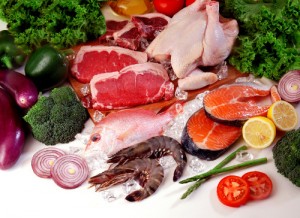
Lean meat, poultry and fish, low-fat dairy products, and eggs are some of your best sources of protein. But be careful to choose lower fat options, such as skim milk rather than whole milk and skinless chicken breasts rather than fried chicken patties.
Fish is another good alternative to high-fat meats. And certain types of fish are rich in omega-3 fatty acids, which can lower blood fats called triglycerides. You'll find the highest amounts of omega-3 fatty acids in cold-water fish, such as salmon, mackerel and herring. Other sources are flaxseed, walnuts, soybeans and canola oil.
Legumes — beans, peas and lentils — also are good sources of protein and contain less fat and no cholesterol, making them good substitutes for meat. Substituting plant protein for animal protein — for example, a soy or bean burger for a hamburger — will reduce your fat and cholesterol intake.
Proteins to choose
Proteins to limit or avoid
Low-fat dairy products such as skim or low-fat (1%) milk, yogurt and cheese
Eggs
Fish, especially fatty, cold-water fish, such as salmon
Skinless poultry
Legumes
Soybeans and soy products, such as soy burgers and tofu
Lean ground meats
Full-fat milk and other dairy products
Organ meats, such as liver
Fatty and marbled meats
Spareribs
Hot dogs and sausages
Bacon
Fried or breaded meats
6. Reduce the sodium in your food
Eating a lot of sodium can contribute to high blood pressure, a risk factor for cardiovascular disease. Reducing sodium is an important part of a heart-healthy diet. The Department of Health and Human Services recommends:
Healthy adults have no more than 2,300 milligrams (mg) of sodium a day (about a teaspoon of salt)
People age 51 or older, African-Americans, and people who have been diagnosed with high blood pressure, diabetes or chronic kidney disease have no more than 1,500 mg of sodium a day
Although reducing the amount of salt you add to food at the table or while cooking is a good first step, much of the salt you eat comes from canned or processed foods, such as soups and frozen dinners. Eating fresh foods and making your own soups and stews can reduce the amount of salt you eat.
If you like the convenience of canned soups and prepared meals, look for ones with reduced sodium. Be wary of foods that claim to be lower in sodium because they are seasoned with sea salt instead of regular table salt — sea salt has the same nutritional value as regular salt.
Another way to reduce the amount of salt you eat is to choose your condiments carefully. Many condiments are available in reduced-sodium versions, and salt substitutes can add flavor to your food with less sodium.
Low-salt items to choose
High-salt items to avoid
Herbs and spices
Salt substitutes
Reduced-salt canned soups or prepared meals
Reduced-salt versions of condiments, such as reduced-salt soy sauce and reduced-salt ketchup
Table salt
Canned soups and prepared foods, such as frozen dinners
Tomato juice
Soy sauce
7. Plan ahead: Create daily menus
You know what foods to feature in your heart-healthy diet and which ones to limit. Now it's time to put your plans into action.
Create daily menus using the six strategies listed above. When selecting foods for each meal and snack, emphasize vegetables, fruits and whole grains. Choose lean protein sources and healthy fats, and limit salty foods. Watch your portion sizes and add variety to your menu choices.
For example, if you have grilled salmon one evening, try a black-bean burger the next night. This helps ensure that you'll get all of the nutrients your body needs. Variety also makes your meals and snacks more interesting.
8. Allow yourself an occasional treat
Allow yourself an indulgence every now and then. A candy bar or handful of potato chips won't derail your heart-healthy diet. But don't let it turn into an excuse for giving up on your healthy-eating plan. If overindulgence is the exception, rather than the rule, you'll balance things out over the long term. What's important is that you eat healthy foods most of the time.
Incorporate these eight tips into your life, and you'll find that heart-healthy eating is both doable and enjoyable. With planning and a few simple substitutions, you can eat with your heart in mind
Friday, June 12, 2015
Hello.. Im here out of this theme of this blog but i have to share this program with all of you for making money online this system(blog) help me to much im here to present you you can read discription on this blog or another site take a look
The Big Ten: 10 Nutrition Rules to Achieve an Athletic Build
A proper diet is essential if you truly want a lean athletic physique. Many people think all they need to do is work hard in the gym and they will be all set, they are mistaken. Diet is actually more important than the time in the gym and it is where many fall short. If you want a toned athletic body you need proper diet in order to get there, exercise alone is not enough. Follow these 10 nutrition rules and you will be well on your way.
1. Eat Clean
I will start with the most important of rule of all which is eating clean. What does eat clean mean? I like to put it this way, if it is made by Mother Nature then eat it, if it isn’t don’t. Example: Mother Nature makes eggs, chicken, fish, fruits and vegetables – eat them. Mother Nature doesn’t make Twinkies, candy bars, pizzas, Cheetos or soda pop – avoid them. It is as easy as that really. If you stop reading this article right here and just adhere to the eating clean principle you will be pretty well off, but please continue.
2. Drink water
Drinking water has many benefits, the first being that it has zero calories. Water can also help curb binge eating by drinking a glass of water with your meal it will fill you up faster and prevent you from eating more than you should. Your body is also about 60% water with your muscles being 73% water so it is a good thing to drink plenty of it especially if you are exercising regularly. Water also helps in digestion, metabolism, joint lubrication, mineral intake and overall body health and function. Overall it is just a healthy thing to do. Try to get in 8 glasses of water per day.
3. Eat Protein
Eating protein will help build and maintain muscle. You should consume at least 1 gram of protein per pound of bodyweight per day (This means 180 grams of protein per day for a 180-pound person). Healthy sources of protein include lean meats such as fish, chicken breasts, turkey, eggs and beans. Lean ground beef can also work as well as a lean cut of steak.
4. High fiber
We all know about the intake of fiber to keep you regular, unfortunately most of us don’t get near enough fiber in there diets. Fiber is even more important in a high protein diet and lets be honest, pretty much all high fiber foods are good for you so be sure to dig in. Examples of high fiber foods: broccoli, whole grains, apples, beans, peas and oatmeal.
5. Protein Shakes
Protein shakes are not only a good way to get the protein you need and BCAA’s but they are also a good meal replacement. Get a nice vanilla protein powder and add some fruit like bananas, strawberries and raspberries and it will fill you up with vitamins, fiber and protein.
6. Avoid These
Simple Carbohydrates – Simple carbohydrates are carbohydrates that are easily digested by the body and will end up stored as fat if they are not used immediately. All simple carbs should be avoided unless you are enjoying a cheat meal. Examples of simple carbs would be white breads, white rice, candy, cookies, regular soda pop, most baked goods, most cereals, and basically anything that contains sugar.
Fried foods – All fried foods should also be avoided, they are loaded with calories and fat and generally do not offer very much nutrition wise.
Sodium Nitrate – Sodium nitrate is found in lunch meats, bacon, sausage, jerky and hot dogs as a preservative. Diets high in Sodium Nitrate have been linked to heart disease, Type II Diabetes and cancer. Luckily it is found in foods that are not really all that healthy so they should be easy to avoid or eat sparingly.
7. Eat Healthy Fats
Not all fats are bad for you. Healthy fats, particularly those containing Omega3 Fatty Acids should be part of a healthy diet. Foods with healthy fats include almonds, olives, walnuts, sardines, salmon and natural peanut butter. Healthy fats can actually boost your fat loss compared to a low fat diet with no healthy fats.
8. Choose Slow Digesting Carbs
When it comes to carbs you should choose slow-digesting carbs such as whole wheat bread, oatmeal, beans, brown rice and wild rice. Slow digesting carbs keep insulin levels low which will reduce fat storage and keep you lean.
9. Eat Your Fruits and Veggies
This one should go without saying. Fruits and vegetables are very good for you, they are packed with vitamins and have lots of fiber in them. Include fruits or veggies or both in every meal.
10. Cheat
Let’s face it, if you are eating the same healthy diet every day you are going to get bored and perhaps give in and say “it’s not worth it”. This is why you need to cheat from time to time, I would say once or twice a week. Get in a quick cheat get it out of your system and get back on track after.
Perhaps even more important than getting it out of your system is the fact that a cheat meal will throw your body a curve ball. Your body gets used to eating healthy will start to adapt and start to slow your metabolism. This is why you need to cheat every few days just to throw your body a curve ball so that is cant adjust and will keep the metabolism high.
Thursday, June 11, 2015
Healthy Living: 8 Steps to Take Today
Healthy living starts right now. Experts tell you how.
To Live Healthy Archive
Healthy living is within your reach, starting today. Sure, healthy living is a long-term commitment, not a flash-in-the-pan fad. But there are steps you can take right now that will make today healthier than yesterday and pave the way for healthy living tomorrow, too.
Here's your checklist of practical healthy living tips that are ready to go. Let's get started.
Healthy Living Step No. 1: Take stock.
Your first step toward healthy living is to get a handle on your health status right now. Here's your to-do list:
Make appointments with your doctor and dentist. Catch up on your routine screening and immunizations, and take the opportunity toask your doctor any questions you might have.
Gauge your girth. Measure your height and weight to check your BMI, and measure your waist circumference to see if you'reoverweight and if your waistline is putting your health at risk.
Assess your activity. How much physical activity do you get in a typical week? How intense is that activity? How much variety do you get in your activity, and how much do you enjoy it? The CDC recommends that adults get at least two and a half hours per week of moderate-intensity aerobic activity or one hour and 15 minutes per week of vigorous-intensity aerobic activity, plus muscle-strengthening activities at least two days per week.
Keep a food diary. Write down everything you eat for a day -- and no fair skipping the items you're embarrassed about. "The idea is to write it down ... without judgment," says Kathianne Sellers Williams, MEd, RD, LD, a nutritionist, wellness coach, and personal trainer with Cafe Physique in Atlanta. "You can't change what you're not aware of or don't acknowledge."
Check your mood and energy. Healthy living includes emotional wellness and adequate rest. How has your mood been lately? Are you experiencing any symptoms of depression or anxiety? Do you usuallysleep well for seven to eight hours a night?
Consider your social network. How strong are your connections with family and friends? Are you plugged in with social or spiritual groups that enrich your life? "People have a fundamental need for positive and lasting relationships," C. Nathan DeWall, assistant professor of psychology at the University of Kentucky, tells To Live Healthy.